
AI Empowers Multilingual VID in Minutes
VID Specialized University streamlined its multilingual sites using Enonic’s layer-based localization and Juke AI, replacing manual duplication with fast, GDPR-compliant automated translations.
VID is a private, non‑profit university headquartered in Oslo with campuses in Bergen, Sandvika, Stavanger and Tromsø. It trains about 6,000 students in health sciences, social sciences and theology.
VID wanted their portal and public site available in both Norwegian and English, but maintaining two versions of every page was time‑consuming. Enonic’s Juke AI translator and layer‑based localization helped solve this multilingual challenge.
Challenge
VID’s website and portal needed to serve both Norwegian‑ and English‑speaking students. Previously, editors had to manually duplicate content across languages, which slowed down publishing and led to inconsistencies.
Translating content into multiple layers required time and coordination across teams. The university needed a solution that would simplify localization without sacrificing quality.
Solution
Layer‑based Localization
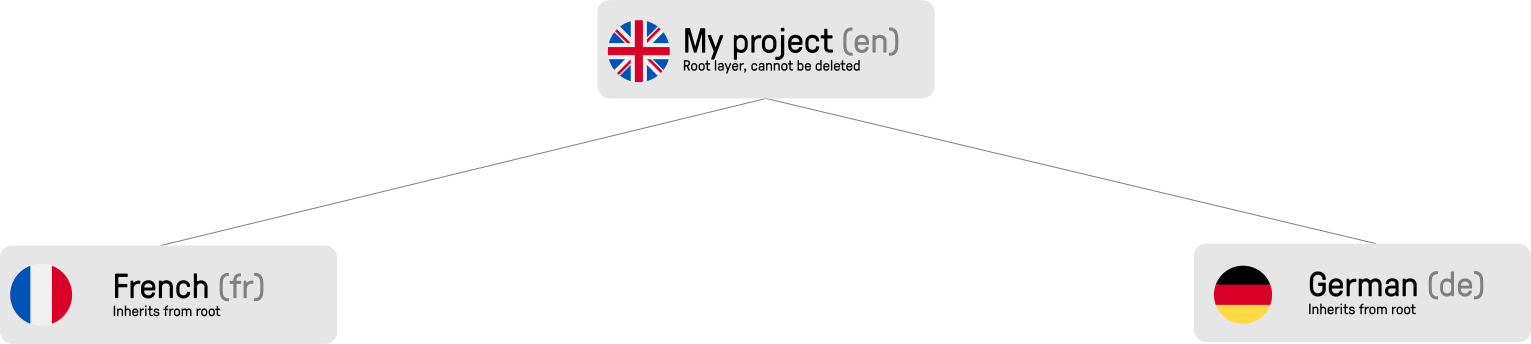
Enonic’s layer system allows editors to create a parent project (in e.g., English) and add child layers for additional languages or markets.
Content from the parent layer “trickles down” to child layers, where editors can localize selected items, add local content, or even archive inherited data.
Publishing in a parent layer does not automatically affect child layers, giving VID control over when translations go live.
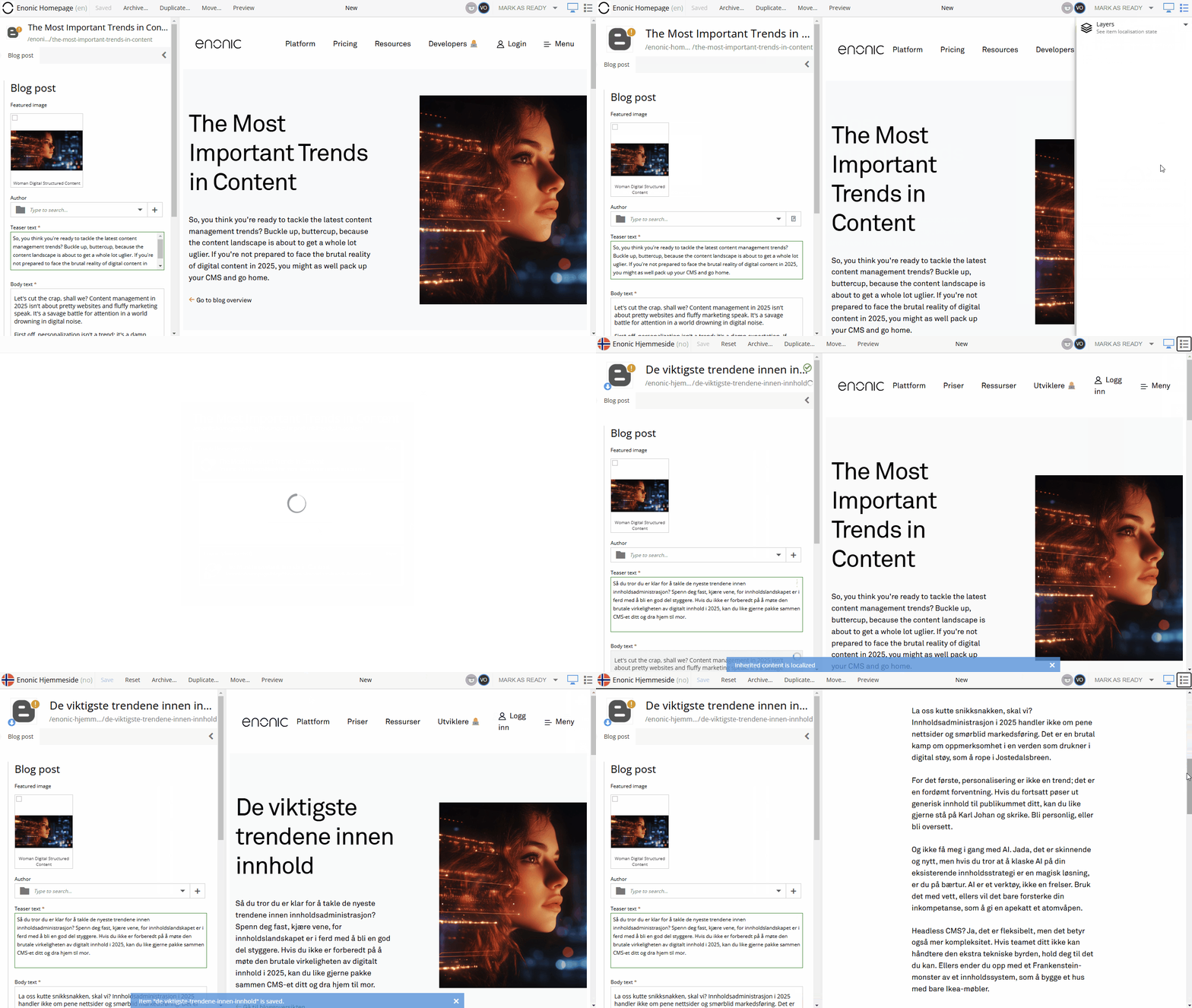
In Content Studio, the context panel provides a Localize button; inherited content appears grayed out until it is localized. This model also supports more complex scenarios, such as regional variants (e.g., Swiss‑German vs. German).
Juke AI Content Translator
To accelerate translations, VID adopted Juke, Enonic’s AI‑powered colleague integrated into Content Studio. Juke operates as an app and appears like another team member in the editor.
Content editors have the possibility to give Juke site wide instructions to secure tone of voice, a standard dictionary, and other information.
This ensures that the translations fit VID’s tone and cultural context, and allows for even more efficient operations.
When editors choose to localize a content item, Juke asks if they want an AI translation to the target layer’s language.
Juke translates the title, introduction and body fields of a content item within seconds, and editors can provide additional custom instructions on top of the standard ones, like adjustments in examples or content for this specific item.
The solution is based on Google Vertex AI, and data sent through the translation service is stateless and GDPR‑compliant.