
Norwegian Food Safety Authority Guides Give Users Fast & Custom Answers
Both external users and internal content editors make use of the Authority's guides, which apply principles of structured content and the CMS of Enonic.
The Norwegian Food Safety Authority (NFSA) is the government's supervisory body for plants, fish, animals and food, with a mission to "safeguard the future for people, animals and nature."
NFSA has a broad social mission and manages around 400 regulations. The social mission ranges from food safety and animal welfare to drinking water, cosmetics and aquaculture.
In order to provide guidance in an accessible way, the Norwegian Food Safety Authority has adopted Enonic as a CMS, where universal design, structured content and user-friendliness are central.
Challenge: Large and Complex Legislation
The Norwegian Food Safety Authority manages a complex set of regulations. Many users, both private individuals and businesses, may have challenges understanding which rules apply to their specific situation.
The need was clear: a digital tool that could translate regulations into simple, understandable choices and answers. Without compromising on quality or the role of authority.
Solution: Guides Built with Enonic
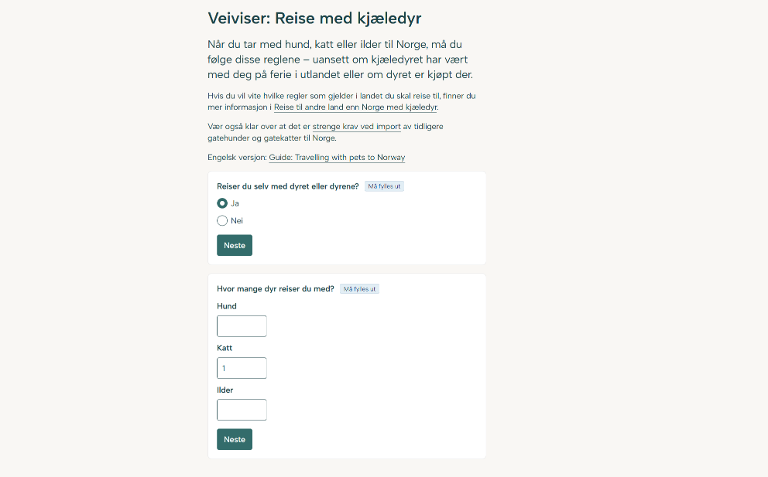
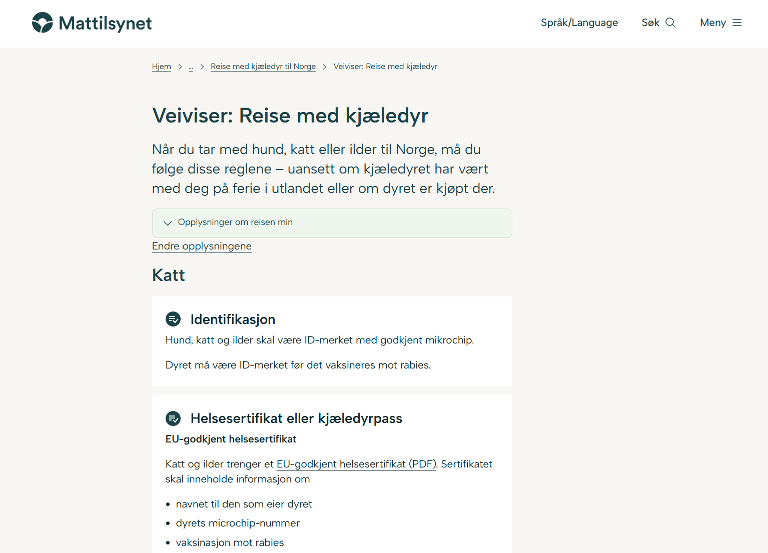
To help users effectively, NFSA developed the concept of guides. This is a step-by-step process where the user enters information in a specific order, and where later steps depend on the information entered in earlier steps. Users ultimately receive a result that is tailored to them.
The guides were designed and developed as a separate app in Enonic, built on the principle of making it easy to do the right thing.
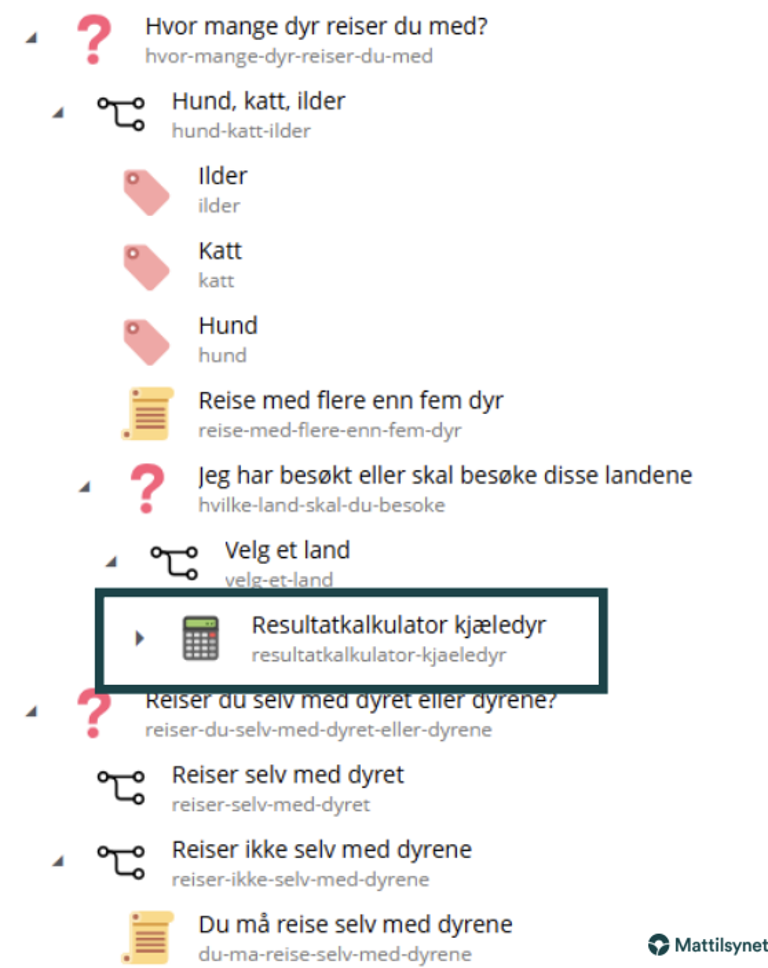
Thanks to Enonic's flexible content architecture in the publishing solution Content Studio, content editors have a large selection of content types and logic with which they can create guides.
Editors can create flow-based questions, group answers and weight results directly in the editor interface, without the need for heavy development effort.
Together with full support for universal design and mobile use, this makes it easy for the Norwegian Food Safety Authority to test, adjust and publish guides continuously.
Example: Results Calculator
The results calculator is an editor tool that gives content producers great control over the logic in the guides. Here, the editors can group the user's answers into different categories and assign different weights to each answer.
In this way, the final result is adapted based on the significance of the choices made. This makes it possible to build intelligent and flexible decision flows without the need for coding.
The Norwegian Food Safety Authority has also developed a clickable preview, so that the editors can see how the guide will work for the user before publication.
The preview helps ensure that the guides can be maintained and tested quickly and efficiently directly in Enonic's editor interface.
Learning Points and Limitations
Although the guides have provided great benefits, there are some important learning points. Firstly, the content is not searchable. Since the guides generate dynamic answers, they are not found via search engines and AI agents.
The guides also require a lot of preparation. For each guide, the Norwegian Food Safety Authority must map the regulations thoroughly, structure questions and validate the logic. Because of this, guides are unsuitable for frequently changed content, as frequently updated regulations require more maintenance.
The user also does not get a full process overview. They get answers to one specific topic, but at the same time do not see the entirety of the regulations.
With Enonic as CMS, the Norwegian Food Safety Authority nevertheless handles these challenges in a structured way:
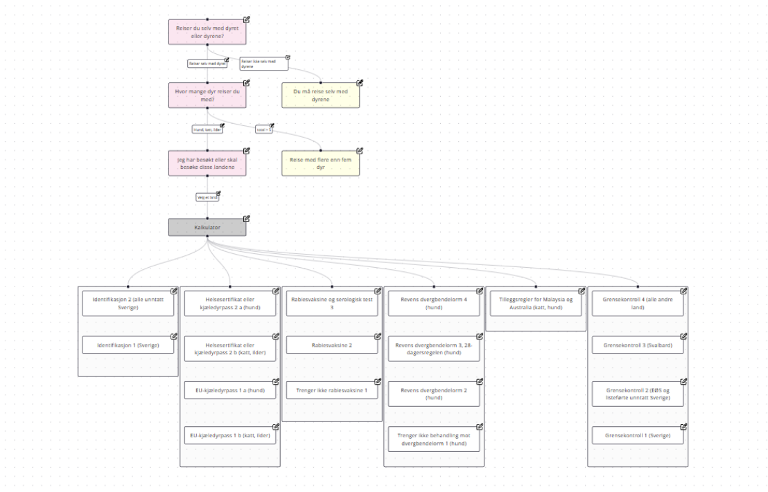
- They use insight and flowcharts in tools like Miro to plan guide logic.
- They can quickly test and adjust flows directly in the editor interface.
- New guides can be published modularly without affecting the rest of the website.
The Effect of the Enonic Integration
By building the guides as an integrated part of Enonic, the Norwegian Food Safety Authority thus gains control over the user experience and editor flow.
NFSA now has a scalable solution that can be used in all subject areas. This is a forward-looking app architecture that is already on its way to becoming an independent Enonic app available to several public sector organizations.